Roof Replacement Checklist for Tyler, TX Homeowners
A practical checklist for planning debris removal around a roof replacement in Tyler, from sizing the container to timing it around your roofer's schedule.
ReadConstruction guide
New-home construction across the Tyler area rarely needs one container size the whole build — here is how to size by phase instead.
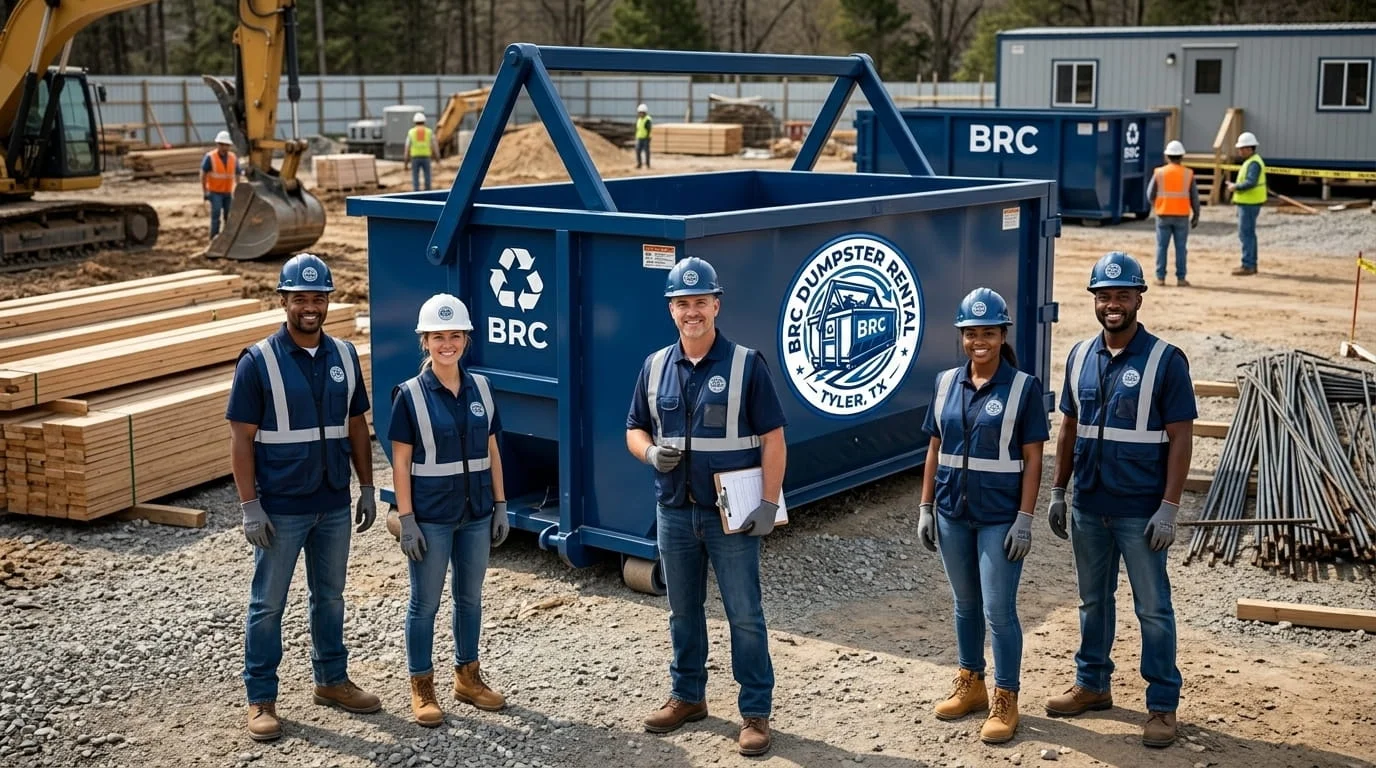
Tyler's new-home construction has kept pace with the city's growth for years, especially in the suburbs toward Bullard, Lindale and Whitehouse. A single-family build generates very different debris at each phase, and sizing one container for the whole project — rather than adjusting by phase — is one of the more common cost mistakes we see.
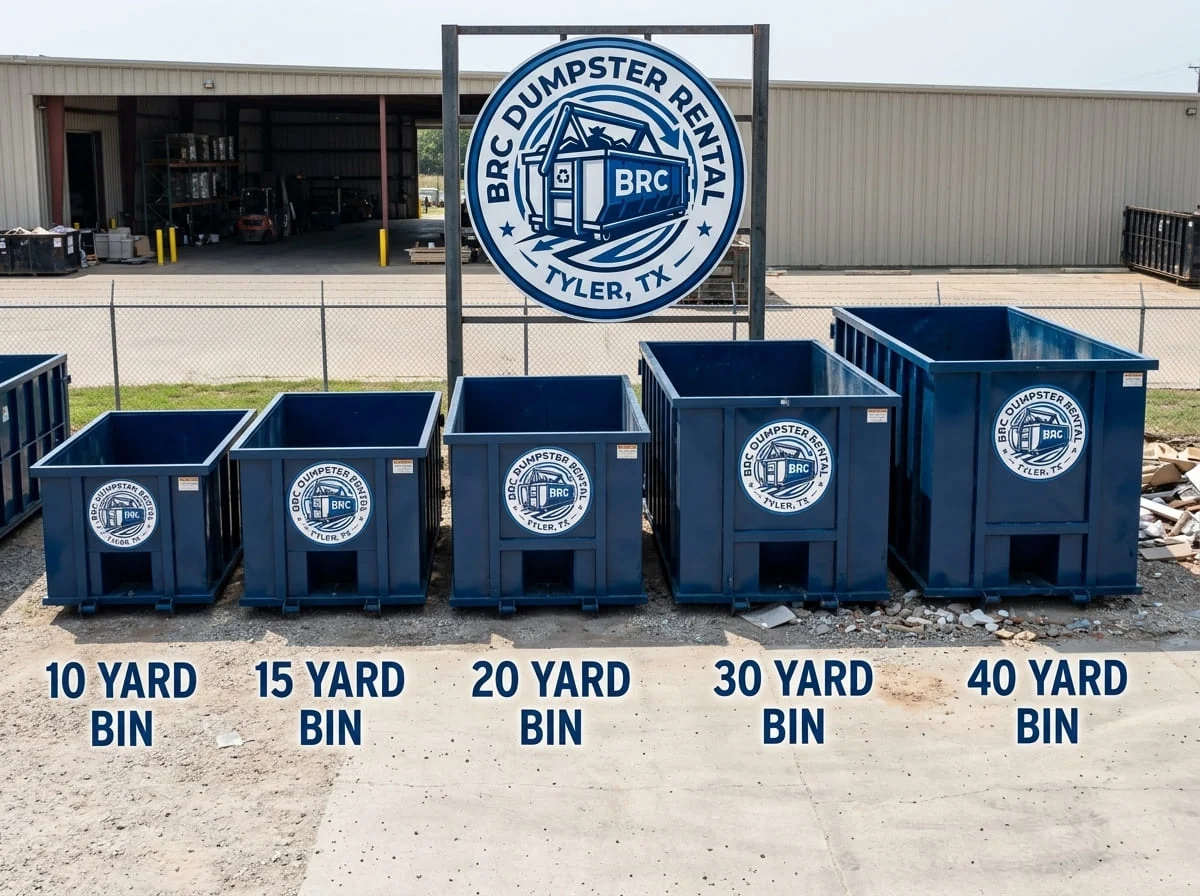
Early-stage debris is often minimal and, when it involves excavation spoil or concrete, is priced by weight rather than volume. A 10 yard is frequently the right (and cheapest) call for this phase specifically.
Framing offcuts, packaging and shipping material fill a container fast by volume but weigh comparatively little. A 20 yard usually handles a standard single-family framing phase without approaching the weight limit.
Drywall is deceptively heavy for its bulk, and a drywall-heavy phase often needs the same 20 yard sized more around weight than volume. A larger custom home or a phase combining drywall with flooring tear-out from a renovation may need to step up to a 30 yard.
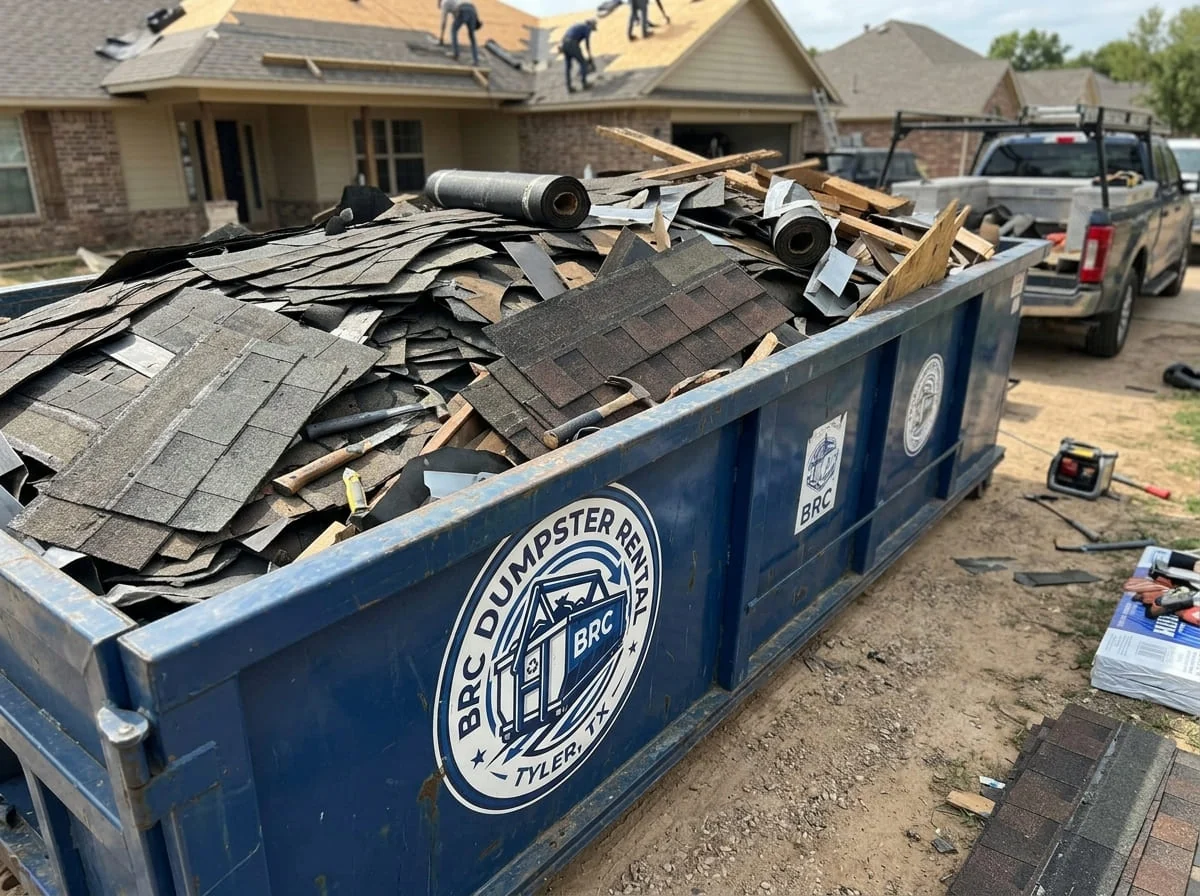
New-construction roofing debris is generally lighter than a tear-off job since there is no old material to remove, but it is still worth sizing separately from the framing container if your builder schedules roofing as its own phase — see our roofing dumpster rental page for tear-off-specific sizing if this build also involves any demolition of an existing structure.
The last phase is usually the lightest — packaging, offcuts and general cleanup debris. Many builders use a smaller container here or fold it into the last swap-out from the drywall phase.
The single biggest efficiency gain on a new build is prioritizing swap-outs so a full container never idles a crew. We schedule around your builder's timeline and prioritize jobsite swap-out requests over new deliveries for exactly that reason.
Talk to a real person
Call (903) 515-5086 and describe the job. Flat price, stated tonnage allowance, and a delivery window on the same call.
Mon–Sat 7:00am – 7:00pm
From this guide
It is usually the cheapest approach. Framing debris is bulky and light; drywall and concrete are dense and heavy. Sizing by phase avoids paying for capacity you do not use in either direction.
A 20 yard usually handles it comfortably, since framing offcuts are bulky rather than heavy.
Yes, this is standard practice for us — a full container on an active site stops your crew, which costs more than the swap itself.
Yes, concrete and excavation spoil are priced by weight rather than volume, and a smaller 10 yard container is often the correct and cheapest sizing for that phase specifically.
Keep reading
A practical checklist for planning debris removal around a roof replacement in Tyler, from sizing the container to timing it around your roofer's schedule.
ReadA practical guide for Tyler-area families planning an estate cleanout, from sizing the container to sorting what should never go in it.
ReadThe practical version of dumpster sizing — what actually stops a container from being full, and which of the five sizes fits your real project.
Read